A gentle note: This article is general information about mental health, not medical advice, diagnosis, or treatment. Feeling drained can have many causes, including physical ones. If exhaustion is affecting your daily life, please reach out to a licensed mental-health professional or your doctor. If you ever feel unsafe or in crisis, contact your local emergency services or a crisis helpline right away.
You've been tired for a while — not the kind a good night's sleep fixes, but the kind still there on Monday after a whole weekend off. Work you used to care about feels like wading through wet sand, you're shorter with people you love, and part of you has quietly stopped expecting things to get better. If that rings true, you may be wondering: is this just stress, or something more?
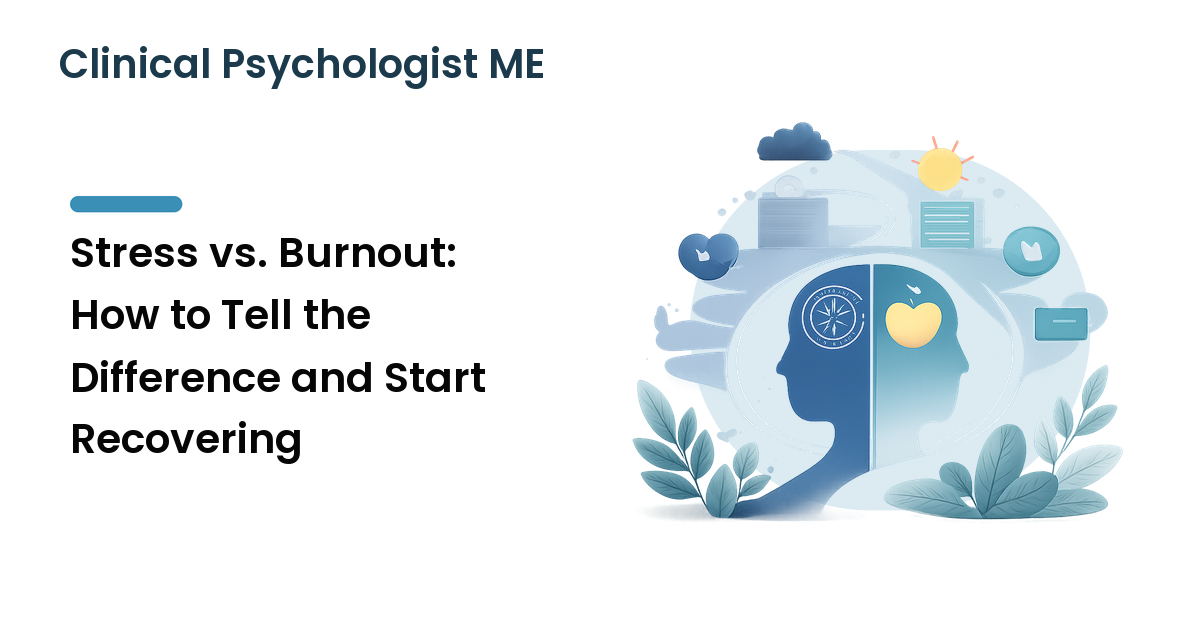
Here's the takeaway up front: stress and burnout overlap, but they're not the same — and the difference matters for what helps. Stress is usually about too much: too many demands, your system in overdrive. Burnout is more often about empty: the tank has run dry, and motivation and feeling have faded out. Naming which you're facing is the first gentle step, because the rest that cures a stressful week often barely touches burnout.
The core difference: "too much" vs. "running on empty"
Stress tends to feel like over-engagement. Your emotions are turned up, your thoughts race, your body is revved — anxious, urgent, wired. There's often a sense that if I could just get on top of this, I'd be fine. For all its discomfort, stress usually still has some fuel left.
Burnout tends to feel like the opposite — disengagement and depletion. Instead of revved up, you feel flattened. Emotions don't run high so much as run out: numb, distant, blunted. Where stress says "there's too much to handle," burnout whispers "what's the point — I've nothing left to give."
A memorable way to carry it: stress is a system in overdrive; burnout is a system that's run out of fuel. They blur into each other — prolonged, unmanaged stress is one of the most common roads into burnout — but the felt experience, and what helps, differ.
Why a long weekend doesn't fix burnout
This is the part that surprises people most. When you're stressed, a genuine break often helps — a few days off and you come back steadier. So when that doesn't work, and you return from holiday just as hollow within a day, that often points to burnout rather than ordinary stress. Burnout builds over months of unrelenting demands, so a couple of days off can't refill what took half a year to drain — it's less like being thirsty and more like being dehydrated. Rest still matters enormously; it's simply why recovery usually asks for something deeper: changes to the ongoing load, not only a pause from it.
Common signs worth noticing
Burnout shows up in how you feel, your body, and how you relate to work. These are general signs, not a checklist or a diagnosis:
- Emotional exhaustion. A bone-deep tiredness that rest doesn't touch — drained, running on empty.
- Growing distance or cynicism. Becoming detached, irritable, or negative — a quiet pulling-away from things you used to care about.
- A sense of ineffectiveness. Feeling that nothing you do makes a difference, or that you're no longer good at things you once handled with ease.
- Loss of motivation and joy. Things that used to give you energy now feel like obligations, and getting started takes far more than it should.
- Physical signals. Headaches, disrupted sleep, appetite changes, or tension that won't release — worth a doctor's check-in, since they can have other causes.
If you'd like a fuller picture of how chronic pressure affects the mind and body before it tips into burnout, our companion piece on understanding anxiety and stress walks through the basics gently.
Gentle first steps toward recovery
Recovering from burnout is rarely one dramatic change — it's usually small, kind course-corrections, repeated patiently. None of this is a cure or a substitute for professional support; think of it as a place to begin.
- Name it without judgement. Burnout isn't weakness; it's a very human response to sustained overload. Saying "I think I'm burnt out," honestly, is a real first step — not a defeat.
- Look at the load, not just the symptoms. Because burnout grows from chronic demands, lasting relief usually means easing the ongoing pressure where you can — workload, expectations, boundaries — not only resting harder on weekends.
- Protect real rest and sleep. Not collapsing in front of a screen, but rest that restores: time outdoors, gentle movement, quiet, and sleep treated as non-negotiable.
- Reconnect, slowly. Burnout tends to isolate. Small, low-pressure contact with people who steady you — and tiny doses of what once felt meaningful — begin to refill the tank.
- Lower the bar, and be patient. Doing less, more sustainably, is part of the medicine — what built slowly heals slowly, and expecting an overnight turnaround only adds fresh pressure.
When to reach out to a professional
Burnout can overlap with — and sometimes mask — other things, including depression or physical health conditions, which is exactly why a professional's eyes are so valuable. Consider reaching out to a licensed mental-health professional or your doctor if any of these fit:
- The exhaustion, numbness, or low mood has lasted weeks and isn't lifting, despite rest and small changes.
- It's clearly affecting your work, sleep, relationships, or health.
- You feel persistently hopeless, can't switch off, or feel you can't keep going as you are.
- You're not sure whether this is burnout, depression, or something physical.
A psychologist, therapist, or doctor can listen without judgement, help untangle what's going on, and work with you on a way forward. You don't have to wait until you've hit a wall to deserve that — reaching out earlier often makes recovery gentler.
If you ever have thoughts of harming yourself, or feel you can't stay safe, please contact your local emergency services or a crisis helpline immediately. You don't have to face that moment alone.
FAQ
What's the main difference between stress and burnout?
Stress usually feels like too much — over-engaged, anxious, revved up, with a sense that getting on top of things would help. Burnout feels more like empty — depleted, numb, and disengaged, with motivation run dry. Prolonged stress is a common path into burnout, but the two feel different and respond to different things.
Why doesn't rest fix my burnout?
Because burnout builds slowly over months of unrelenting demands, a short break can't refill what took a long time to drain. Rest still matters, but lasting recovery usually means easing the ongoing load — not only pausing from it. If a real holiday leaves you just as hollow, that's a meaningful sign.
How do I know if I'm burnt out or just tired?
Ordinary tiredness tends to lift after proper rest; burnout's exhaustion stays despite it, and brings emotional flatness, growing cynicism, and a sense that nothing you do makes a difference. This is a reflection, not a diagnosis — a professional can help you be sure.
Can burnout turn into depression?
Burnout and depression can overlap and be hard to tell apart, since both involve exhaustion, low motivation, and loss of enjoyment. They aren't the same thing, but persistent burnout can take a serious toll on mood. If low mood, hopelessness, or numbness lingers, it's worth talking with a licensed professional or your doctor.
How long does it take to recover from burnout?
There's no fixed timeline, and it varies. Because burnout develops gradually, recovery tends to be gradual too — often weeks to months of sustained, kinder changes rather than a quick reset. Patience is part of the healing, and professional support can help it along.
A kind next step
If you take one thing from this guide, let it be this: feeling empty isn't a character flaw — it's often your mind and body asking, honestly, for less load and more care. You don't have to overhaul your whole life this week. Choose one small, kind step: protect a single hour of genuine rest, or write down one thing that's been quietly draining you. Be patient — what drained slowly refills slowly. And if it feels too heavy to carry alone, reaching out to a licensed professional is one of the most caring things you can do. Learn more or get in touch at clinicalpsychologistme.com.